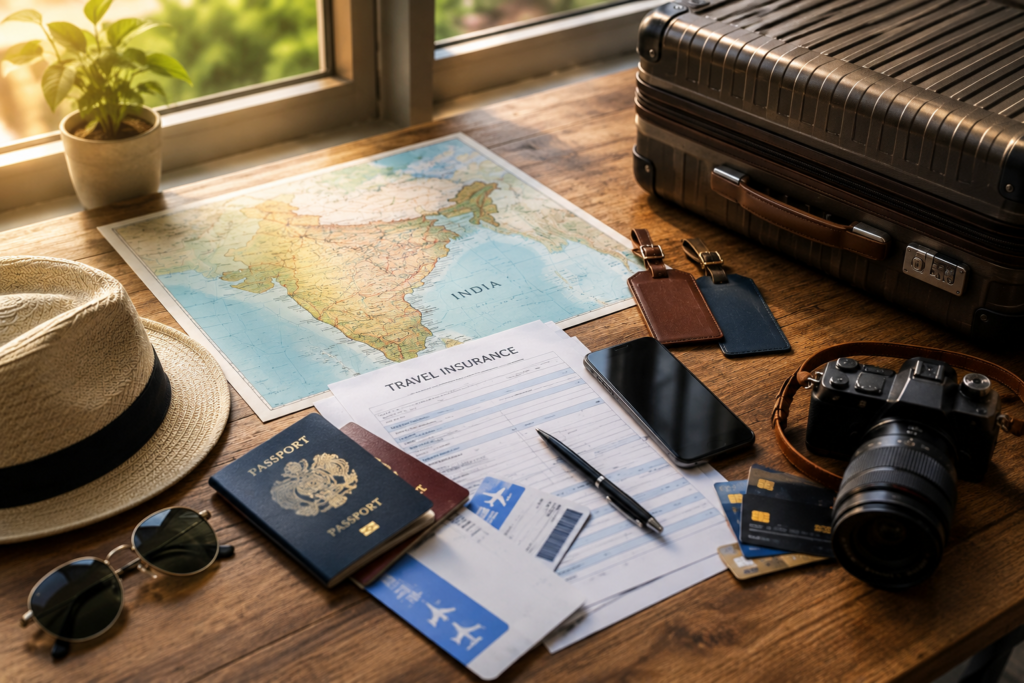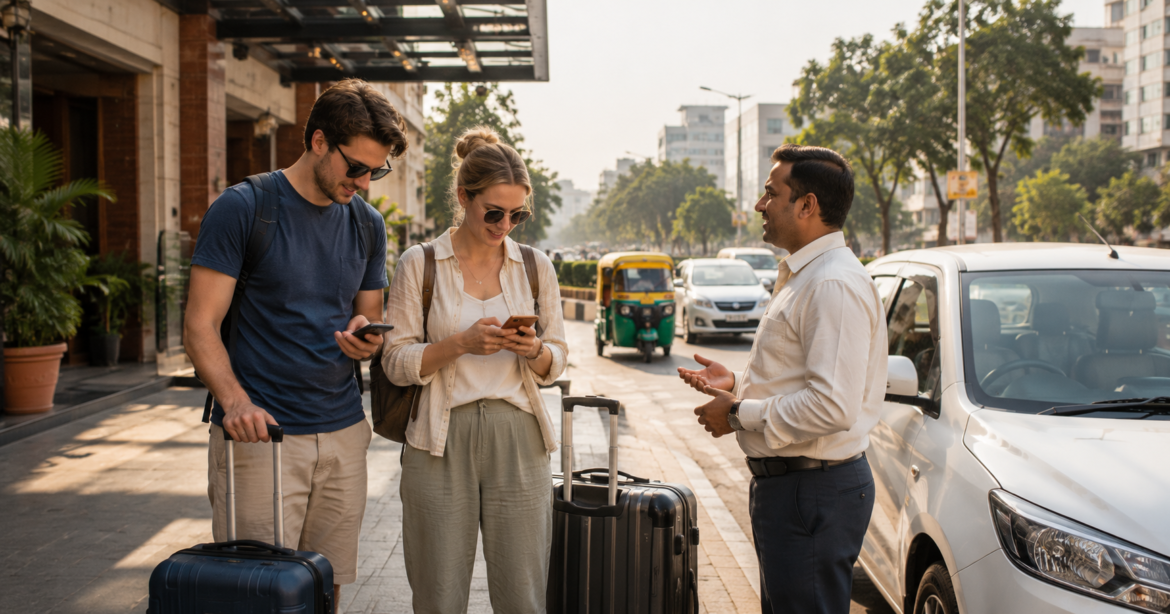
Your smartphone will probably be one of your most useful travel tools during a trip to India.
You’ll use it for Google Maps, WhatsApp, hotel reservations, translation, ride bookings, flight updates, restaurant searches, photography and keeping in touch with family back home.
The good news is that mobile connectivity is widely available across India’s major tourist destinations.
The less obvious question for American visitors is:
Should you use your US carrier, buy an Indian SIM card or arrange an eSIM?
There isn’t one correct answer for everyone.
A traveller spending four days in Delhi may value convenience more than price, while someone touring India for three weeks may benefit significantly from having a local mobile connection.
This guide explains the main options so you can choose what works for your trip.
If you’re preparing for your first visit beyond just mobile connectivity, our first-time India travel tips cover many of the other practical details worth arranging before departure.
Quick Answer: What Is the Best Mobile Option for US Tourists in India?
For most American travellers, there are three practical choices:
- Use international roaming from your US carrier – easiest, but the cost and data allowance depend on your existing plan.
- Use a travel eSIM – convenient for compatible unlocked phones and particularly useful if you want data ready soon after arrival.
- Get an Indian SIM – potentially useful for longer stays and travellers who want a local Indian mobile number, but identity verification and activation requirements mean it may involve more setup than simply switching on US roaming.
For a short India holiday, convenience may matter more than finding the absolute cheapest data.
For a longer trip, comparing all three options before departure is worthwhile.
Before Leaving the USA: Check Your Phone First
Do this before worrying about SIM providers.
Is Your Phone Unlocked?
A locked phone may only work with your current US carrier.
If you plan to use another physical SIM or certain eSIM services, confirm that your device is unlocked before leaving the United States.
Contact your carrier if you’re unsure.
Do not wait until you’re standing in an Indian airport to discover that your phone cannot accept another network.
Does Your Phone Support eSIM?
Many recent smartphones support eSIM technology, but compatibility varies by model and region.
Check your phone’s settings or manufacturer’s specifications.
Some devices can keep your US line active while using a second eSIM for mobile data. This can be extremely convenient for travellers who still need access to their American number.
Check Your US Carrier’s India Roaming Benefits
Do not assume international roaming will automatically be expensive.
Some American plans already include certain international benefits.
For example, T-Mobile currently states that qualifying plans can include international data and texting across more than 200 countries and destinations, with the amount of high-speed data depending on the plan. It also offers international passes for eligible customers who need additional high-speed data and calling.
The important point is to check your exact plan immediately before travelling, because carrier prices, benefits and conditions can change.
Option 1: Using Your US Phone Plan in India
International roaming is the simplest option.
You land in India, switch on your phone and—assuming your plan, device and roaming settings are compatible—connect through a local partner network.
You keep:
- Your existing US number
- Your regular contacts
- Your normal phone setup
- Access to SMS messages sent to your American number
That last point can be especially useful if your US bank or another service sends security messages to your regular number.
Advantages of US Roaming
No SIM Setup
You don’t need to visit a mobile store or replace a physical SIM.
Keep Your American Number
Friends, family and services can continue reaching you through your normal number, subject to your plan’s roaming terms.
Convenient for Short Trips
If you’re only in India for a week and your existing plan includes suitable international data, the convenience may outweigh the potential savings of arranging another connection.
Disadvantages
The main issue is that benefits differ dramatically between US carriers and plans.
You need to check:
- India data allowance
- High-speed data limit
- Calling charges
- Incoming call charges
- Hotspot restrictions
- Daily or monthly roaming fees
Never assume that because a friend’s phone worked cheaply in India, your plan will do the same.
Option 2: Using an eSIM in India
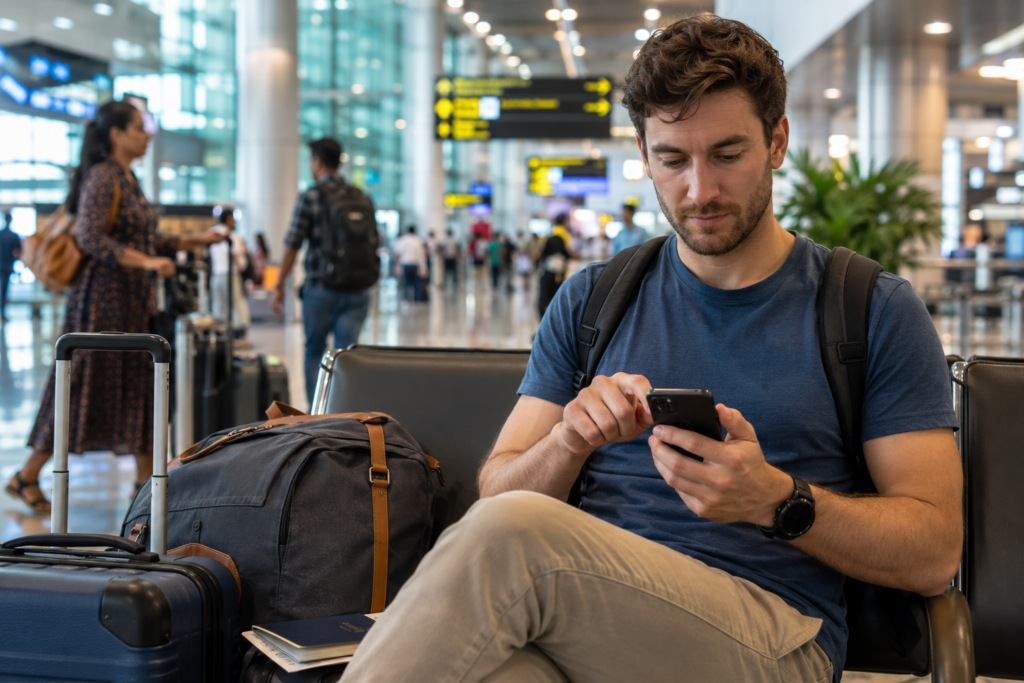
An eSIM is a digital SIM profile installed on a compatible smartphone without inserting a physical card.
For travellers, the main attraction is convenience.
Depending on the provider and plan, you may be able to purchase and configure your travel eSIM before leaving the United States.
When you arrive in India, you activate the appropriate data line according to the provider’s instructions.
Why eSIMs Appeal to American Travellers
They can eliminate several inconveniences:
- No physical SIM swapping
- No tiny SIM card to lose
- Setup can often begin before departure
- Your US SIM can potentially remain installed
- Useful for data-heavy applications such as maps and WhatsApp
For travellers moving between Delhi, Agra and Jaipur, having mobile data available throughout the journey is particularly helpful for checking routes, hotel details and attraction information.
But Check What You’re Actually Buying
Not every travel eSIM provides the same service.
Some are data-only.
That means you may receive internet access but not a traditional Indian mobile number for ordinary voice calls or SMS.
Before purchasing, check:
- Total data allowance
- Validity period
- Whether 5G is supported
- Whether hotspot/tethering is allowed
- Whether voice calls are included
- Whether SMS is included
- Which Indian network(s) the eSIM uses
- What happens when the data allowance runs out
A cheap eSIM is not necessarily a good deal if it provides too little data for your trip.
Option 3: Getting a Local Indian SIM Card
India has large domestic mobile networks with extensive 4G and expanding 5G connectivity.
A local SIM can be attractive to travellers staying for several weeks or those who specifically need an Indian number.
Unlike buying a prepaid SIM in some countries, however, mobile connections in India are subject to customer identity verification requirements.
Foreign visitors should therefore be prepared to provide appropriate identification and travel documentation when obtaining a local connection.
Requirements and availability can change, so confirm the current procedure with an authorised telecom retailer rather than buying a SIM from an unofficial street seller.
Major Mobile Networks in India
The major consumer networks travellers are likely to encounter include:
- Jio
- Airtel
- Vi (Vodafone Idea)
- BSNL
Network performance varies by city, neighbourhood and rural location.
In major tourism centres such as Delhi, Agra and Jaipur, mobile connectivity is generally easy to find, although signal quality can still vary inside thick historic buildings, remote areas or on certain road sections.
If you’re travelling on the classic Delhi–Agra–Jaipur route, mobile internet is useful but you should still download important information before long road journeys.
Do You Need an Indian Phone Number?
Not necessarily.
If your primary needs are:
- Google Maps
- Browsing
- Social media
- Hotel communication through apps
then a reliable data connection may be sufficient.
WhatsApp remains especially useful because many Indian hotels, drivers, guides and travel businesses use it for everyday communication.
However, a local number can be convenient for some domestic services and direct local calls.
Whether that convenience justifies obtaining a local SIM depends on the length and style of your trip.
How Much Mobile Data Will You Need?
This depends far more on your habits than on the number of days you’re travelling.
Light User
You mainly use:
- WhatsApp messages
- Occasional Google Maps
- Basic web searches
Your data consumption may remain relatively modest.
Average Traveller
You regularly use:
- Google Maps
- WhatsApp voice calls
- Social media
- Restaurant searches
- Ride-hailing apps
- Photo uploads
You’ll want a more comfortable data allowance.
Heavy User
You:
- Stream video
- Upload large numbers of photos
- Make frequent video calls
- Use your phone as a hotspot
- Work remotely
You should pay much closer attention to high-speed data allowances rather than simply buying the cheapest plan.
Hotel Wi-Fi can reduce mobile data consumption, but don’t assume it will always be fast enough for remote work or large uploads.
Keep Your US Number Active If You Need Banking Codes
This is easy to overlook.
Before travelling, consider which accounts depend on your US mobile number for verification.
These may include:
- Bank accounts
- Credit cards
- Email accounts
- Business services
- Airline accounts
If your phone supports dual SIM or SIM + eSIM operation, you may be able to keep your US line available while using another connection for data.
But understand your carrier’s roaming charges before leaving the US, particularly for voice calls and data.
Mobile Internet on the Golden Triangle Route
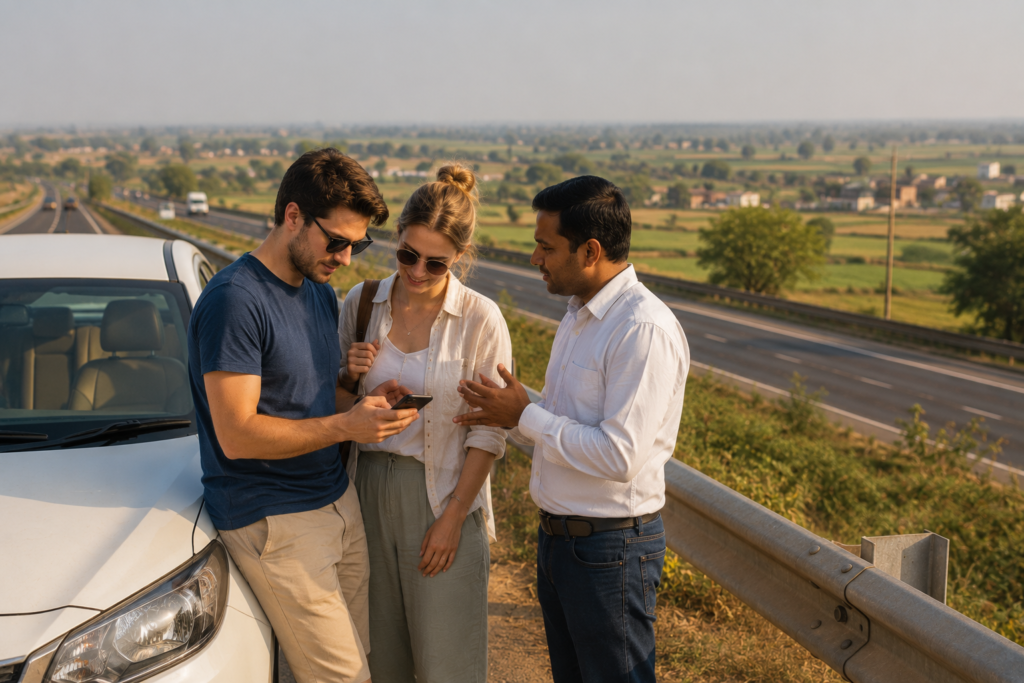
For tourists travelling between Delhi, Agra and Jaipur, smartphone connectivity is particularly useful because the journey combines city sightseeing with several hours of road travel.
You may use your phone for:
- Hotel directions
- Monument information
- Translation
- Driver communication
- Restaurant searches
- Weather forecasts
- Digital tickets
- Flight or train updates
If you’re planning this circuit, our Golden Triangle travel guide explains the broader route and practical considerations for travelling between the three cities.
Even with good mobile coverage, download offline Google Maps for Delhi, Agra and Jaipur before beginning the journey.
It costs nothing and gives you a backup if the mobile signal temporarily disappears.
Can US Tourists Buy a SIM Card at an Indian Airport?
Possibly, but don’t make your entire connectivity plan depend on finding and activating a SIM immediately after landing.
Availability, opening hours, documentation requirements and activation procedures can vary between airports and telecom outlets.
If you want a local SIM, use an authorised mobile operator store or legitimate retailer and carry the identification and travel documents required for verification.
Avoid buying an unofficial pre-activated SIM simply because it appears faster or easier.
For travellers arriving after a long international flight, having temporary connectivity through US roaming or a pre-arranged travel eSIM can make the first few hours much easier. You can then investigate a local SIM after reaching your hotel if you still need one.
Indian SIM vs eSIM vs US Roaming
The best option depends on the length of your trip and how much convenience matters to you.
| Feature | US Roaming | Travel eSIM | Indian SIM |
|---|---|---|---|
| Setup before India | Usually yes | Often yes | Usually no |
| Keep US SIM installed | Yes | Often possible | Depends on phone |
| Keep US number | Yes | Often yes with dual SIM | Not as primary local line |
| Indian phone number | No | Often no | Yes |
| Mobile data | Yes | Yes | Yes |
| Local setup required | Minimal | Minimal | More likely |
| Identity verification in India | No | Usually not for travel eSIM | Typically required |
| Good for short trips | Excellent if plan is suitable | Excellent | May be unnecessary |
| Good for longer stays | Depends on cost | Good | Potentially excellent |
| Main advantage | Convenience | Convenient data | Local connectivity |
Do not select an option based solely on price.
For a seven-day holiday, saving a small amount may not justify spending valuable sightseeing time arranging a local connection.
For a month-long visit, the calculation can be very different.
Best Option for a 7-Day India Trip
For many American tourists visiting India for approximately one week, I would prioritise simplicity.
Start by checking your existing US plan.
If it already provides adequate high-speed data in India at a reasonable cost, international roaming may be all you need.
If your US carrier’s roaming option is expensive or offers insufficient high-speed data, a reputable travel eSIM can be a convenient alternative for an unlocked compatible phone.
A local Indian SIM becomes more attractive when you specifically need an Indian number or your stay is long enough to justify the additional setup.
Best Option for a 2–3 Week India Trip
For a longer holiday, data usage becomes more important.
You’ll probably use your phone regularly for:
- Navigation
- Restaurant research
- Hotel communication
- Ride-hailing
- Attraction information
- Translation
- Photo sharing
In this situation, compare the total cost and data allowance of:
US roaming vs travel eSIM vs Indian prepaid service
rather than comparing only the initial price.
If you need a local number frequently, an Indian SIM may become more useful.
Should You Buy an eSIM Before Flying?
If you choose a travel eSIM, setting it up before departure can reduce stress after landing.
However, follow the provider’s activation instructions carefully.
Some plans begin their validity period when installed, while others begin only when they first connect to a supported network.
You don’t want a seven-day plan to start several days before you reach India.
Before purchasing, verify:
- Your exact phone model is supported.
- Your phone is unlocked.
- India is included.
- Activation timing is clear.
- Data allowance is sufficient.
- Hotspot usage is permitted if needed.
- The validity period covers your entire trip.
Take screenshots of the installation instructions before departure in case you need them without internet access.
Wi-Fi in Indian Hotels
Most established hotels in major tourist destinations offer Wi-Fi.
Quality varies considerably.
A luxury hotel may provide fast and reliable internet throughout the property, while a smaller hotel may have excellent reception near the lobby but weaker coverage inside certain rooms.
If reliable internet is essential for work, don’t simply look for “Free Wi-Fi” on the booking page.
Check recent guest reviews for comments about:
- Connection speed
- Room coverage
- Reliability
- Video-call performance
Remote workers should ideally maintain mobile data as a backup rather than relying entirely on hotel Wi-Fi.
Be Careful with Public Wi-Fi
Free Wi-Fi at airports, cafés, hotels and public spaces can be convenient, but unsecured networks should be treated cautiously.
Avoid performing sensitive activities such as online banking on an unknown public network.
Useful precautions include:
- Confirm the correct network name with staff.
- Avoid unknown open networks.
- Keep your phone’s operating system updated.
- Use secure websites and apps.
- Disable automatic Wi-Fi connection.
- Turn off file sharing.
- Use your mobile connection for sensitive transactions when practical.
Convenience should not come at the expense of basic digital security.
WhatsApp Is Extremely Useful in India
American visitors sometimes underestimate how useful WhatsApp will be during an India trip.
Many people in the tourism industry use it regularly, including:
- Hotels
- Drivers
- Tour guides
- Tour operators
- Restaurants
- Small businesses
It can be easier to send your hotel location or flight details through WhatsApp than explain everything during a traditional phone call.
Install and configure the app before leaving the United States if you intend to use it.
If you change SIMs during your trip, be careful before accepting any prompt to change the phone number associated with your WhatsApp account unless you actually want to do so.
Download Offline Maps Before Travelling
Even if you purchase a large data plan, offline maps are an excellent backup.
Before departure—or while connected to reliable hotel Wi-Fi—download maps covering your main destinations.
For a classic North India trip, consider downloading:
- Delhi
- Agra
- Jaipur
Offline navigation can be helpful when travelling between cities or temporarily entering an area with weaker mobile reception.
Save your important hotel locations as well.
Save Important Information Offline
Your entire holiday shouldn’t become inaccessible because your phone temporarily loses its data connection.
Keep screenshots or offline copies of:
- Hotel addresses
- Hotel phone numbers
- Driver contact details
- Flight information
- Train information
- Passport copy
- Visa copy
- Travel insurance details
- Tour confirmation
- Important tickets
Do not rely exclusively on an email inbox that requires an internet connection.
If you’re preparing the rest of your travel essentials as well, our India travel checklist can help organise the important items to arrange before departure.
Will Your US Charger Work in India?
Mobile internet isn’t much use if your phone has no battery.
India commonly uses a different plug configuration from the United States, and electrical supply is typically around 230V/50Hz.
Many modern phone and laptop chargers are designed for a wide input-voltage range, but check the voltage information printed on your own charger rather than assuming compatibility.
If your charger supports India’s voltage, you may only need an appropriate plug adapter.
Do not confuse a plug adapter with a voltage converter. They perform different functions.
A compact power bank is also useful during long sightseeing days, provided it complies with your airline’s rules for carrying lithium batteries.
Mobile Connectivity During Delhi–Agra–Jaipur Travel
Major cities generally provide good mobile connectivity, but road journeys should never be treated like sitting on home broadband.
Temporary signal changes can occur.
Before leaving each hotel:
- Download your route.
- Screenshot your next hotel’s address.
- Save your driver’s number.
- Keep key booking details available offline.
- Charge your phone.
This simple routine makes you far less dependent on continuous connectivity.
Common Mobile Internet Mistakes US Tourists Make
Assuming Their US Plan Includes India
“International coverage” can mean different things depending on the carrier and plan.
Verify India specifically.
Forgetting to Unlock the Phone
Discovering that your device is carrier-locked after arriving can make switching connectivity options difficult.
Check before departure.
Buying Too Little Data
A small plan disappears quickly if you’re constantly uploading photos, watching videos or making video calls.
Choose based on actual usage.
Leaving Data Roaming Enabled on the Wrong SIM
Dual-SIM phones provide flexibility but can also create confusion.
Make sure you know which line is being used for mobile data.
Expecting Every eSIM to Include Calls
Many travel eSIM products provide data only.
Read the plan details.
Depending Entirely on Hotel Wi-Fi
Hotel Wi-Fi is useful, but mobile data provides an important backup for navigation and communication when you’re away sightseeing.
Removing the US SIM Without Thinking About Verification Codes
If important accounts send authentication messages to your American number, consider how you’ll receive those messages before changing your phone setup.
A Simple Setup for Most American Tourists
For many US visitors, the easiest arrangement looks like this:
Before departure
Check whether the phone is unlocked → confirm eSIM compatibility → review US carrier roaming → compare an eSIM if necessary → install WhatsApp → download offline maps.
After arriving
Confirm mobile data works → keep your US number available if needed → connect to trusted hotel Wi-Fi → save your driver and hotel contacts.
You do not need the technically most sophisticated setup.
You need a connection that works reliably enough that you can enjoy the trip without constantly thinking about your phone.
Final Recommendation
For a short first-time trip to India, start by checking what your existing American carrier already provides.
If your plan includes suitable India roaming, keeping your normal number can be the simplest solution.
If roaming is expensive or limited, a travel eSIM is often worth considering for an unlocked compatible smartphone.
For longer stays or travellers who specifically need a local Indian number, obtaining a SIM from an authorised Indian telecom provider may make more sense.
Whichever option you choose, prepare before leaving home.
A few minutes spent checking phone compatibility, roaming terms, offline maps and authentication requirements can prevent hours of frustration after arrival.
Frequently Asked Questions
1. Can US tourists buy a SIM card in India?
Yes, foreign visitors can obtain mobile service in India, subject to the telecom provider’s current identity-verification and activation requirements. Use an authorised provider or retailer and be prepared to provide the required identification and travel documentation. Procedures can change, so check current requirements when you travel.
2. Is an eSIM better than a physical SIM for India?
For many short-term American visitors, an eSIM can be more convenient because a compatible unlocked phone can often be prepared before arrival. However, some travel eSIMs provide data only and do not include an Indian phone number, traditional voice calls or SMS. Check exactly what the plan includes before purchasing.
3. Will my US phone work in India?
Many modern US smartphones can work in India, but compatibility depends on your device, carrier lock status, supported network bands and chosen service. If you intend to use another SIM or eSIM, confirm that your phone is unlocked before leaving the United States.
4. Can I use my American phone number while using an India eSIM?
Often, yes, if your device supports dual-SIM functionality. You may be able to keep your US line available for calls or verification messages while using another eSIM for mobile data. Check your phone’s capabilities and your US carrier’s roaming charges before departure.
5. Is 5G available in India?
Yes, 5G services are available across many Indian cities and other covered areas, but availability depends on your network, device, plan and location. Travellers should not choose a plan solely because it advertises 5G; reliable 4G is more than adequate for navigation, messaging and most everyday travel needs.
6. Is hotel Wi-Fi enough for travelling around India?
Usually not by itself. Hotel Wi-Fi can reduce your mobile data consumption, but you’ll still benefit from mobile connectivity when navigating, communicating with drivers, using ride-hailing services or looking up information while sightseeing.
7. How much mobile data do I need for one week in India?
There is no universal amount. Travellers who mainly use WhatsApp, maps and email need considerably less data than those uploading videos, making frequent video calls or using their phone as a hotspot. Review your normal mobile usage before choosing a plan.
8. Should I arrange mobile internet before flying to India?
At minimum, compare your options before departure. Check whether your US plan includes India roaming, confirm your phone is unlocked and determine whether it supports eSIM. Having a connectivity plan before landing can make airport transfers and your first day considerably easier.
Conclusion
Staying connected in India is relatively straightforward once you understand your options.
For American tourists, the best solution usually comes down to three choices: continuing with a US carrier’s international roaming, installing a travel eSIM or obtaining a local Indian SIM.
There is no need to make the decision more complicated than it needs to be.
For a short holiday, convenience is often more valuable than saving a few dollars. If your existing US plan provides suitable India roaming, keeping your normal setup may be the easiest approach. If roaming is expensive or restrictive, an eSIM can provide a convenient alternative on a compatible unlocked phone.
For longer stays, particularly when you need an Indian number, a local SIM may become more useful.
Whatever you choose, prepare the essentials before leaving home: check your phone’s lock status, understand roaming charges, download offline maps, install the apps you’ll need and make sure you can still receive important account verification messages.
Your phone should make travelling through India easier—not become another thing you have to manage throughout your holiday.
Before You Travel to India
Mobile connectivity is only one part of preparing for an international journey.
Make sure your visa, travel insurance, payment options, accommodation, airport transfer and essential documents are organised before departure. Keeping digital and offline copies of important information can also make your first few days considerably easier.
Once those practical details are sorted, you can spend less time troubleshooting your phone and more time experiencing India.