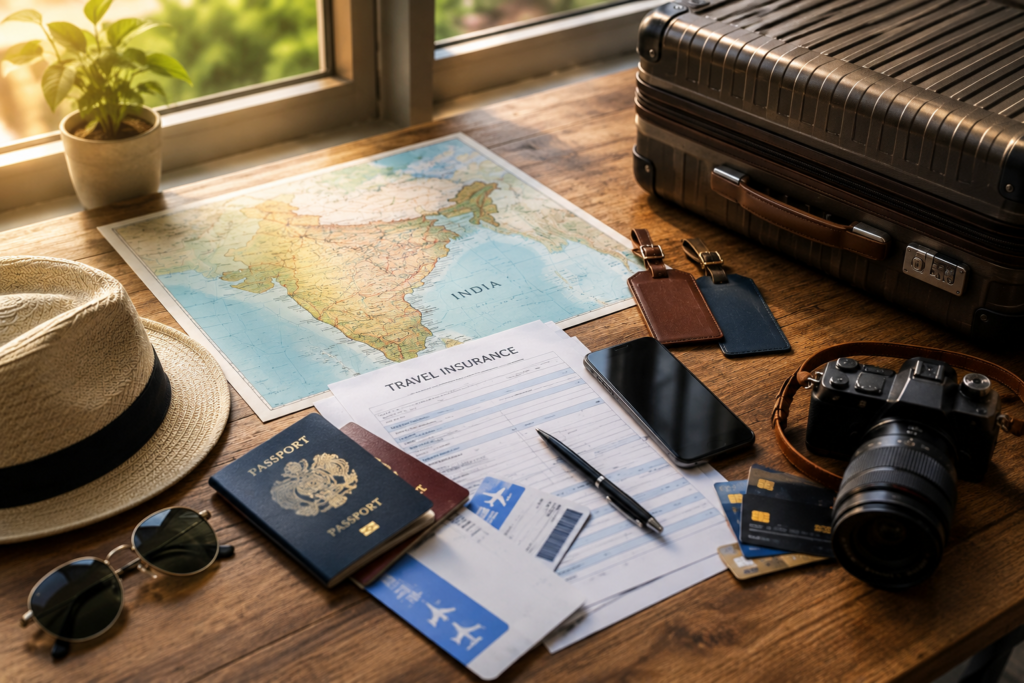
Applying for an Indian visa is usually one of the first steps when planning a trip from the United States.
Whether you’re travelling to admire the Taj Mahal, explore Rajasthan’s royal cities or enjoy a longer holiday across India, understanding the visa process before booking your flights can help avoid unnecessary stress.
Fortunately, many American travellers can apply online through India’s official e-Visa system for eligible travel purposes, while other travellers may require a regular paper visa depending on the purpose and duration of their visit. The Government of India also continues to offer long-validity tourist visa options for US citizens.
This guide explains the main visa options, documents you’ll generally need, how the application process works and practical advice before you travel.
If you’re organising your first visit to India, our First Time India Travel Tips article is another useful resource before finalising your travel plans.
Quick Answer
Most US citizens require a valid visa before travelling to India.
For tourism, many travellers choose the official Indian e-Tourist Visa, which is available in multiple validity periods, while others may apply for a regular tourist visa depending on their travel plans. Your passport should normally be valid for at least six months beyond your arrival and have sufficient blank pages. Always submit your application through the official Government of India visa portal.
Do US Citizens Need a Visa for India?
Yes.
US passport holders generally need a valid Indian visa before travelling to India.
Unlike destinations that allow visa-free entry for American tourists, India requires travellers to obtain the appropriate visa before departure unless they qualify under a specific exemption.
The good news is that obtaining a tourist visa is often straightforward when you prepare your documents carefully and apply through the official system.
Types of India Visas Available for US Citizens
India offers several visa categories depending on the purpose of travel.
Choosing the correct visa is important because each category has different conditions.
e-Tourist Visa
The e-Tourist Visa is one of the most popular choices for American travellers visiting India for:
- Holidays
- Sightseeing
- Visiting friends or relatives
- Short yoga programmes
- Certain short recreational visits
The Government of India currently offers multiple e-Tourist Visa validity options, including 30-day, 1-year and 5-year visas for eligible applicants.
Regular Tourist Visa
Some travellers may prefer or require a regular paper tourist visa.
US citizens are also eligible for long-validity tourist visas issued through Indian missions, subject to current rules and eligibility.
Business Visa
If your primary reason for travelling is business meetings, commercial activities or professional work that qualifies under Indian immigration rules, a Business Visa or e-Business Visa may be appropriate instead of a tourist visa.
Medical Visa
Travellers visiting India specifically for medical treatment should normally apply for a Medical Visa or e-Medical Visa where eligible.
Separate rules apply for accompanying attendants.
Conference Visa
Visitors attending approved conferences organised by recognised government bodies or eligible organisations may need an appropriate Conference Visa or e-Conference Visa.
Which Visa Is Best for Most American Tourists?
For the majority of leisure travellers, the official e-Tourist Visa is usually the most convenient option because the application is completed online.
However, always choose the visa category that accurately reflects the purpose of your visit.
Applying for the wrong visa category can lead to delays or refusal.
Passport Requirements
Before beginning your application, check your passport carefully.
Generally, it should:
- Be valid for at least six months from your expected arrival date.
- Have at least two blank pages.
- Be in good physical condition.
- Match the personal details entered on your application exactly.
Even small spelling differences between your passport and visa application can create unnecessary problems.
Documents You’ll Usually Need
Requirements vary depending on the visa type, but American travellers commonly prepare:
- Valid US passport
- Recent passport-style photograph
- Passport information page
- Travel details
- Email address
- Payment method for applicable fees
Some visa categories require additional supporting documents.
Read the instructions for your specific visa before submitting the application.
How to Apply for an India e-Visa
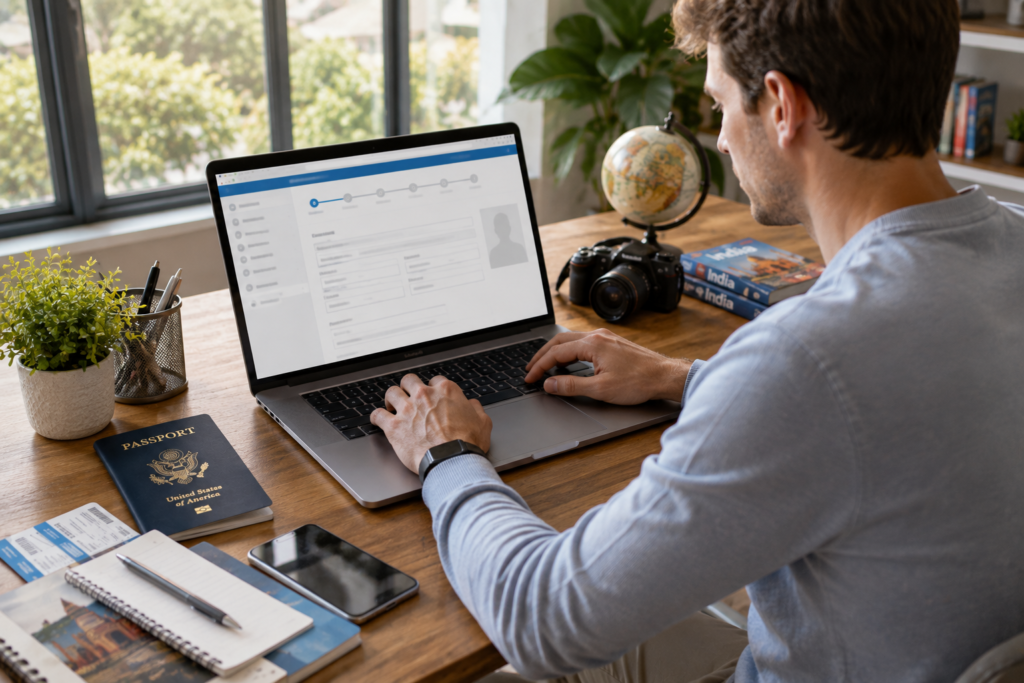
The process is completed online through the official Government of India e-Visa portal.
The basic steps are:
- Choose the correct visa category.
- Complete the online application.
- Upload the required documents.
- Pay the visa fee.
- Wait for processing.
- Receive the Electronic Travel Authorisation (ETA) if approved.
- Carry a copy of your approval when travelling to India.
Only use the official government website for your application. Be cautious of unofficial websites charging unnecessary service fees.
When Should You Apply?
Avoid leaving your visa application until the final few days before departure.
Applying well before your planned travel date provides time to resolve any unexpected issues, upload replacement documents if necessary and receive your approval before booking non-refundable arrangements.
Waiting until the last minute can create unnecessary stress, particularly during busy travel periods.
Common Mistakes to Avoid
Many application delays happen because of simple errors.
Some of the most common include:
- Selecting the wrong visa category.
- Uploading unclear photographs.
- Entering passport details incorrectly.
- Applying through unofficial websites.
- Waiting until the final week before departure.
- Travelling with a passport close to expiry.
Taking a few extra minutes to review your application before submission can help prevent many of these problems.
e-Visa vs Regular Tourist Visa
One of the most common questions American travellers ask is whether they should apply for an e-Tourist Visa or a regular tourist visa.
The answer depends mainly on your travel plans.
For most holidays, sightseeing trips and family visits, the official e-Tourist Visa is the simplest option because the application is completed online.
A regular tourist visa may be more appropriate if your travel plans fall outside the scope of the e-Visa scheme or you specifically require a paper visa issued through an Indian mission.
Quick Comparison
| Feature | e-Tourist Visa | Regular Tourist Visa |
|---|---|---|
| Application | Online | Through the regular visa process |
| Passport submission | Normally not required for e-Visa | May be required depending on the process |
| Best for | Tourism, sightseeing, family visits | Longer or specific travel requirements |
| Approval | Electronic Travel Authorisation (ETA) | Visa issued through the regular system |
Always select the visa category that accurately reflects the purpose of your visit. Applying under the wrong category can delay or affect your application.
How Long Can US Citizens Stay in India?
The permitted stay depends on the visa you receive.
For example:
- The 30-day e-Tourist Visa is intended for short visits.
- The 1-year and 5-year e-Tourist Visas allow multiple entries, but the maximum stay permitted during a calendar year is subject to current Government of India rules.
- Long-term regular tourist visas issued to US citizens are also subject to stay limitations and applicable immigration regulations.
Always check the conditions printed on your visa approval because they take precedence over general travel advice.
How Long Does Processing Take?
Processing time varies depending on:
- Visa category
- Accuracy of your application
- Supporting documents
- Individual circumstances
- Government processing
For regular visa applications handled through Indian Consulates, processing commonly takes up to five business days after receipt of a complete application, although some cases can take longer. e-Visa processing times also vary, so travellers should apply well before departure rather than waiting until the last few days.
A good rule is simple:
Never book an itinerary that depends on receiving your visa at the last minute.
How Much Does an India Visa Cost?
Visa fees are determined by the Government of India and may change without notice.
The total amount can vary depending on:
- Visa type
- Nationality
- Validity period
- Time of year (for certain e-Visas)
- Applicable service charges
Rather than publishing fixed prices that may become outdated, always check the official Government of India visa website before submitting payment.
Can You Enter India Through Any Airport?
No.
Travellers using an e-Visa must arrive through authorised immigration checkpoints designated for the e-Visa scheme.
India has many approved international airports and selected seaports for e-Visa holders.
Before booking flights, confirm that your arrival airport is included in the current authorised list.
What Happens When You Arrive in India?

After landing, you’ll proceed to immigration.
Typically, immigration officers may ask questions about:
- Purpose of your visit
- Length of stay
- Accommodation
- Return or onward travel
- Passport and visa
For e-Visa travellers, biometric information is normally collected on arrival as part of the immigration process.
After immigration, collect your luggage, complete customs formalities and continue to the arrivals area.
If you’re arranging airport transfers before your journey, our First Time India Travel Tips guide explains what to expect during your first few hours in India.
Why Are Some Visa Applications Delayed or Refused?
Many problems are avoidable.
Common reasons include:
- Incorrect passport details
- Blurred document uploads
- Poor-quality passport photographs
- Missing supporting documents
- Choosing the wrong visa category
- Inconsistent information
- Applying too close to departure
Always review your application carefully before final submission.
Should You Book Flights Before Receiving Your Visa?
A cautious approach is best.
Although many travellers plan their itinerary in advance, avoid making expensive non-refundable commitments until your visa has been approved whenever possible.
The Indian Consulates also advise applicants not to finalise travel arrangements before a visa decision has been made.
Travel Insurance Is Still Important
A visa allows you to enter India.
It does not provide medical cover, trip cancellation protection or baggage insurance.
For that reason, many international travellers arrange comprehensive travel insurance before departure.
Our Travel Insurance for India guide explains what to look for when comparing policies.
Practical Tips Before Applying
These simple steps can make the process much smoother:
- Apply well before your departure date.
- Use the exact information shown in your passport.
- Upload clear, high-quality documents.
- Save digital copies of your application.
- Print your visa approval before travelling.
- Carry both printed and digital copies of important travel documents.
- Keep your passport valid well beyond your planned return date.
After Your Visa Is Approved
Once your visa has been granted, you can begin organising the rest of your trip.
Important items include:
- Flights
- Hotels
- Airport transfers
- Mobile connectivity
- Currency
- Travel insurance
- Sightseeing itinerary
Many first-time visitors combine Delhi, Agra and Jaipur into a single journey because it offers an excellent introduction to North India.
If that’s your plan, our Golden Triangle Tour Packages can help you compare different itineraries before finalising your travel arrangements.
Frequently Asked Questions
1. Do US citizens need a visa before travelling to India?
Yes. American passport holders generally require a valid Indian visa before travelling to India. For most leisure trips, the official e-Tourist Visa is the most popular option, although other visa categories are available depending on the purpose of travel.
2. Can US citizens apply for an India visa online?
Yes. Eligible travellers can apply through the official Government of India’s e-Visa system for tourism and certain other travel purposes.
Always submit your application through the official government website rather than unofficial third-party portals.
3. How long does it take to receive an India visa?
Processing times vary depending on the visa category and individual circumstances.
Because delays can occasionally occur, it is advisable to apply well before your intended departure date instead of waiting until the final week before travelling.
4. How long must my passport be valid?
Your passport should generally remain valid for at least six months beyond your expected arrival in India and should contain sufficient blank pages for immigration purposes.
Always verify the latest passport requirements before applying.
5. Can I visit the Taj Mahal with an e-Tourist Visa?
Yes.
Visitors travelling to India for tourism may use an appropriate tourist visa to visit attractions including:
- Taj Mahal
- Agra Fort
- Jaipur
- Delhi
- Kerala
- Rajasthan
- Goa
- Varanasi
provided the visa conditions permit tourism.
6. Should I print my e-Visa approval?
Yes.
Although many travellers keep digital copies on their phones, carrying a printed copy of your Electronic Travel Authorisation and other important travel documents is recommended.
7. Can I extend my tourist visa while in India?
Visa conditions vary depending on the category issued.
If your travel plans change, consult the relevant Indian immigration authorities rather than assuming that a tourist visa can be extended.
8. What should I arrange after my visa is approved?
Once your visa has been granted, you should begin organising:
- Flights
- Accommodation
- Travel insurance
- Airport transfers
- Mobile connectivity
- Currency
- Sightseeing itinerary
Preparing these items before departure makes the first few days in India much smoother.
Conclusion
Obtaining an India visa is usually one of the first and most important steps when planning your journey from the United States.
Fortunately, the process is straightforward for many travellers when they choose the correct visa category, prepare their documents carefully and apply through the official Government of India visa system.
Rather than rushing your application a few days before departure, allow plenty of time for processing, double-check every detail you enter and keep copies of all important travel documents.
Once your visa is approved, you can focus on the exciting part of the journey—planning your itinerary, choosing your hotels and discovering some of the world’s most remarkable cultural and historical destinations.
Whether you’re visiting India for the first time or returning to explore more of the country, careful planning before departure will help ensure a smoother and more enjoyable travel experience.
Plan Your India Journey
Once your visa has been approved, you’re ready to start planning the rest of your trip.
For many American visitors, the classic Delhi–Agra–Jaipur route provides the perfect introduction to India, combining iconic landmarks, rich history and vibrant local culture in one well-balanced itinerary.
Whether you’re looking for a private Golden Triangle holiday, a Taj Mahal day tour or a customised North India itinerary, planning everything in advance allows you to spend more time enjoying your holiday and less time worrying about logistics after arrival.